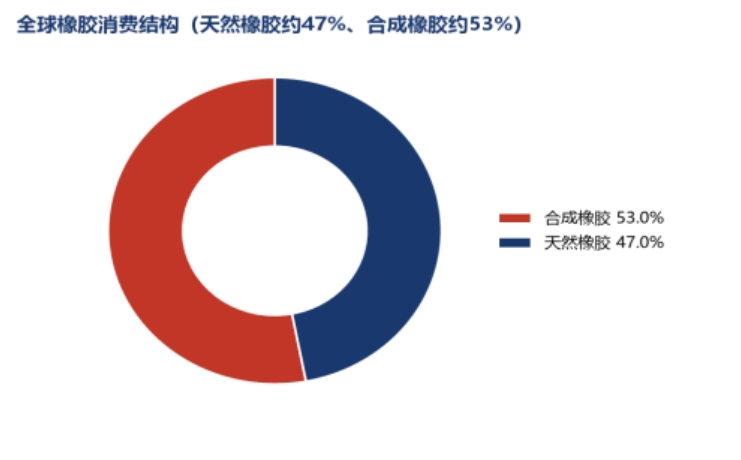
The first overview of the Rubber Map series explains clearly; Who is planting and who is buying;. This article takes the perspective back to a deeper level: since humans have already created synthetic rubber, why do they still have to cut rubber and plant trees year after year? An often overlooked fact is that synthetic rubber was already industrialized around World War II and now accounts for about 53% of global rubber consumption, while natural rubber seems to have been; Half substitution;. But in 2024, the price of natural rubber will rise by about 46% for the whole year (ANRPC caliber), once again exposing the vulnerability of the natural rubber supply side. Natural rubber is also commonly referred to as“ White gold;. But its value comes not only from scarcity, but also from its unique material properties and difficult to rapidly expand supply system. This is also the reason why natural rubber has long been difficult to replace and has become an important raw material in China's tire and other industrial chains. This article answers three questions: Why is natural rubber difficult to replace? Which fields rely most on it? What does China's high dependence on imports mean? 30 second conclusion: Synthetic rubber has accounted for about 53% of global rubber consumption, but natural rubber is still difficult to replace as a whole in tires, shock absorbers, and some medical latex products due to its comprehensive properties such as rebound, low heat generation, and fatigue resistance; At the same time, its supply is highly dependent on tropical production areas. Data card ① Global rubber consumption: synthetic rubber accounts for about 53%/natural rubber accounts for about 47% Data card ② China's natural rubber consumption accounts for nearly half of the world's total, with a self-sufficiency rate of less than 15% Data card ③ About 70% of the world's natural rubber is used for tires; In typical FHWA data, natural rubber accounts for approximately 65% of truck tires, 2026%
Planting map
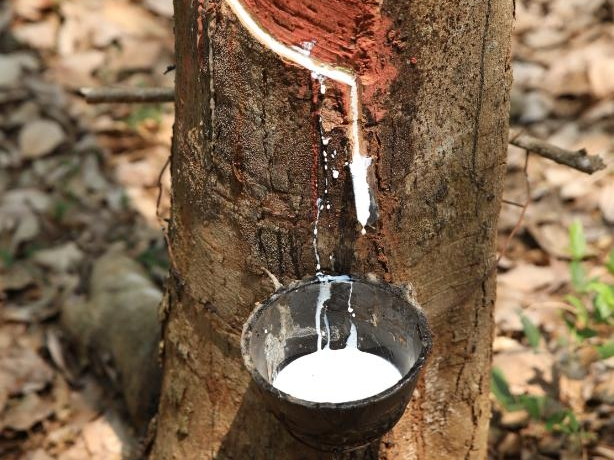
01 was“ Half substitution; Natural rubber synthetic rubber has replaced a considerable portion of natural rubber, but it has not been completely squeezed out of the market. In the 1940s, wars caused disruptions in natural rubber supply, prompting many countries to develop synthetic rubber on a large scale through petrochemical routes. Subsequently, with the expansion of the petrochemical industry, a supply pattern of natural rubber and synthetic rubber coexisting gradually formed globally. According to the International Rubber Research Organization (IRSG) and industry statistics, global rubber consumption has maintained a long-term trend; Natural rubber accounts for about 47%, while synthetic rubber accounts for about 53%; The structure is slightly dominated by synthetic rubber. The global rubber consumption structure (synthetic rubber accounts for about 53% and natural rubber accounts for about 47%), but in the past 80 years, synthetic rubber has not completely replaced natural rubber. Why? The answer is not only in terms of output, but also in terms of performance. Rubber tree cutting diagram, rubber farmer cutting and harvesting site (Image source:) Wikimedia Commons,Koh Chang, Thailand, Rubber tapping, Latex.jpg,CC BY-SA 3.0) The real rubber cutting site demonstrated the most basic way to obtain natural rubber: cutting rubber lines on tree trunks and letting latex flow into rubber cups.
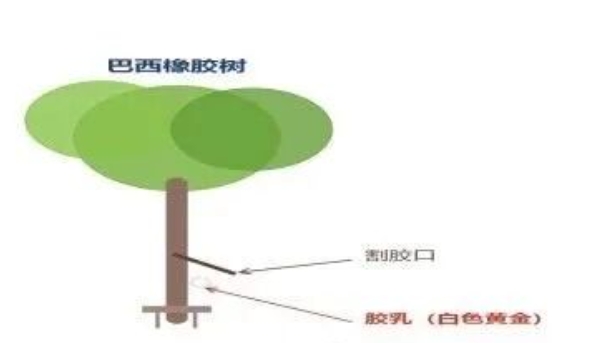
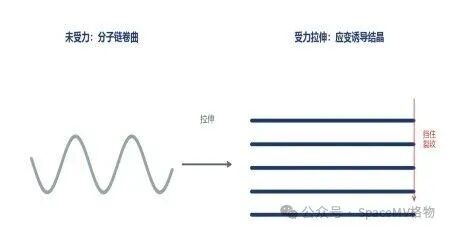
02 True threshold: Why is natural rubber difficult to replace? Natural rubber comes from Brazilian rubber tree latex, mainly composed of cis-1,4-polyisoprene, and its unique properties are closely related to its molecular structure. More importantly, natural rubber has; Strain induced crystallization; Characteristic: When subjected to tensile stress, some molecular chains orient and form crystalline regions, thereby suppressing crack propagation and improving tear and fatigue resistance. Due to the strain induced crystallization mechanism, natural rubber exhibits high resilience, low dynamic heat generation, and excellent tear and fatigue resistance, especially suitable for high-speed, heavy load, and repeated deformation conditions. It should be noted that natural rubber is not; Synthetic rubber cannot be replicated;. Synthetic polyisoprene rubber (IR) has a highly similar structure to natural rubber and can approach its performance in some scenarios. The real gap lies in the comprehensive performance formed by factors such as high molecular weight, microstructure, and non rubber components, which makes it difficult to replicate synthetic routes on an industrial scale at similar costs. It is precisely the combination of these properties that makes natural rubber difficult to replace as a whole in high dynamic load scenarios.
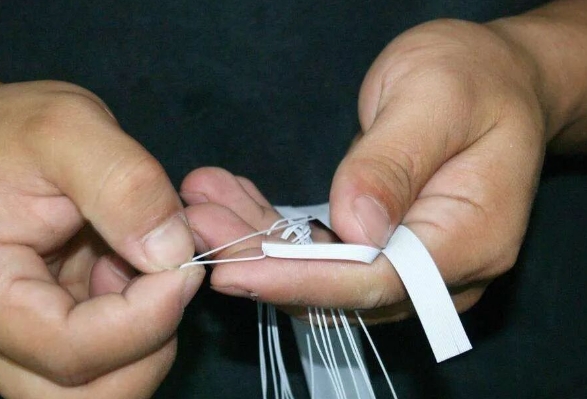
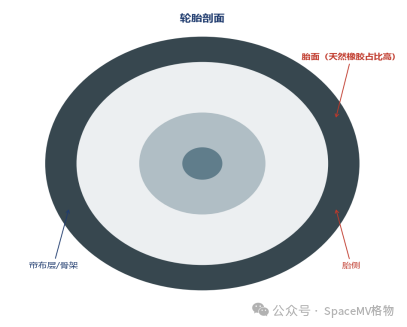
03 From tires to healthcare: Which scenarios are more difficult to replace? Look at the flow of natural rubber, and the boundary of substitution will be clearer. The natural rubber industry chain: from rubber forests to tires and medical products. Tire profiles and natural rubber are the main parts of natural rubber. About 70% of natural rubber is used in tires worldwide, but the dependence on natural rubber varies greatly among different tires, and the proportion under different statistical calibers is not completely consistent. According to a typical tire composition data from the Federal Highway Administration (FHWA) in the United States, natural rubber accounts for about 35% of the recyclable rubber in passenger car tires and about 65% in truck tires. This is a typical formula in history, not a uniform ratio for all tires. Overall, high load scenarios such as trucks, construction machinery, and aviation tires rely more on natural rubber. What does this mean? The performance advantages of natural rubber are most valuable in high-speed, heavy-duty, and repetitive deformation scenarios; Therefore, it is difficult for tire companies to completely replace synthetic rubber. The proportion of natural rubber in passenger car and truck tires (FHWA historical typical value) is another type of application for medical products. Natural rubber latex is commonly used in medical devices such as gloves, catheters, condoms, etc. under FDA regulation. Natural latex is still widely used in some products, but synthetic materials such as polyisoprene have provided mature alternative routes. Therefore, the medical field is also not; Irreplaceable; But rather, different materials coexist for a long time. Downstream application structure of natural rubber (tires account for about 70%)
The true lifeline of 04: two types of raw materials and two sets of supply chain performance determine that natural rubber is difficult to replace as a whole, and the supply side further amplifies this value. Natural rubber comes from rubber trees, while synthetic rubber mainly relies on petrochemical raw materials. Natural rubber and synthetic rubber: sources, properties, and supply chain risks. Natural rubber comes from rubber forests and is highly concentrated in tropical Asia, with major production areas including Thailand, Indonesia, Vietnam, India, China, and the rapidly developing Ivory Coast in recent years. As a perennial tropical crop, its yield is easily affected by climate, diseases, and rubber cutting labor, and the expansion cycle is relatively long. Satellite imagery of the rubber plantation belt in Vietnam (February 12, 2026) showing the major countries with global natural rubber production in 2024 (10000 tons, ANRPC October 2024 forecast). The regular distribution of artificial forests, roads, and villages presents a typical Southeast Asian rubber planting landscape. Synthetic rubber mainly relies on petrochemical raw materials, with a wider production distribution, and expansion mainly depends on investment in petrochemical equipment. This means that the risk structures of the two supply chains are different: natural rubber supply is highly concentrated in a few tropical countries, and weather, policy, and labor changes can all affect supply expectations and transmit to global prices. The price increase in 2024 is the result of the combined effects of supply disturbances, demand, inventory, oil prices, and synthetic rubber prices. For China, this concentration means a higher dependence on imports. China consumes nearly half of the world's natural rubber, with a domestic self-sufficiency rate of less than 15% and a long-term dependence on imports exceeding 80%. The global supply of natural rubber is not only influenced by the policies of major producing countries, but also relies on the planting, rubber cutting, and export systems of a large number of small farmers in Asia.
Conclusion: Natural rubber will not disappear
Natural rubber will not be replaced by synthetic rubber as a whole, this is not a technological stagnation, but the result of the combined effect of performance and supply structure. Especially in high dynamic load scenarios such as tires and shock absorbers, natural rubber still has strong advantages; Synthetic rubber plays a more important role in supplementing and replacing certain demands. For China, this is a supply chain proposition that constitutes a growth cycle. China consumes nearly half of the world's natural rubber, with a self-sufficiency rate of less than 15%, and its raw material supply still heavily relies on imports. As long as global scale production still relies mainly on Brazilian rubber trees, China will find it difficult to completely escape the weather, policies, labor, and geopolitical risks of tropical production areas.
FAQ Q1: Which is more commonly used, natural rubber or synthetic rubber? A: Synthetic rubber is slightly more abundant, with a global consumption structure of approximately 53% to 47%. Q2: Why can't tires do without natural rubber? A: Tires repeatedly flex during driving and continue to generate heat. Natural rubber has low heat generation, high rebound, and fatigue resistance, which helps reduce the risk of fatigue failure of tires under high temperature, high load, and repeated bending conditions; According to typical FHWA data, the proportion of natural rubber in truck and bus tires can reach about 40% to 60% (the typical value for truck tires is about 65%). Q3: Do airplane tires really have to be made of natural rubber? A: It cannot be understood as 100% mandatory use. Aviation tires require high strength, fatigue resistance, and low heat generation performance, so natural rubber still has important value, but the specific ratio depends on the tire model and design. Q4: Don't medical gloves all use nitrile now? A: Nitrile gloves have largely replaced natural latex, one of the main reasons being to reduce the risk of latex allergies. However, natural latex is still used in some products such as gloves, condoms, and catheters, while synthetic materials such as polyisoprene also provide alternative routes. Q5: Can synthetic rubber completely replace natural rubber? A: We cannot simply“ One size fits all;. Natural rubber has been widely replaced in ordinary industrial products, but it is still difficult to replace it as a whole in scenarios that require high comprehensive performance, such as heavy-duty tires and shock absorbers. Q6: Can China reduce imports by relying on its own variety of rubber trees or developing rubber grass? A: Space is limited. Brazilian rubber trees are mainly suitable for tropical regions, while China has limited suitable rubber land; Rubber grass can be planted in colder regions, and planting and rubber extraction experiments are also being promoted domestically. However, it is still limited by rubber production, cost, and large-scale processing, making it difficult to replace rubber trees in the short term. Q7: Why has the price of natural rubber increased so much in 2024? A: Abnormal weather in some major production areas has led to tight supply, but prices are also affected by factors such as demand, inventory, oil prices, and synthetic rubber prices. According to ANRPC standards, natural rubber prices will increase by approximately 46% in 2024. Q8: How much natural rubber does China import in a year? A: By 2025, China will import approximately 6.49 million tons of natural rubber (dry weight), with a long-term dependence on imports exceeding 80%, but it is still difficult to significantly reduce in the short term.