1、 The concept of medical rubber products. According to processing methods, medical rubber products can be classified into molded products, extruded products, rolled products, latex products, injection molded products, etc. From the perspective of biosafety of medical rubber products, they can be divided into two categories: in vitro and in vivo.
2、 Classification of medical rubber products. 1. In vitro medical rubber products
① The common characteristics of extracorporeal medical rubber products are small size, high quality requirements, and numerous categories, mainly divided into two categories: first, rubber parts for medical and nursing use, such as various extracorporeal catheters, air cushions, hot water bags, etc; The second is the accessories for the sealed packaging of the pharmaceutical industry, such as infusion rubber plug, blood transfusion plug, sealing gasket of spray, etc.
② Medical rubber products come into contact with various drugs, human tissues, and biological organisms, and are often disinfected under high temperature, high pressure conditions or in various organic disinfectants; Some also require long-term storage under low temperature conditions, with strict requirements for the physical, mechanical, and chemical stability of rubber materials. 2. Internal medical rubber products
① The main materials of medical rubber products in the body generally include silicone rubber material, polyurethane material, and purified natural rubber. The common characteristics are good biocompatibility, good breathability or selective breathability, excellent weather aging resistance, and disinfection resistance.
② Biocompatibility is the description of the interaction between biomedical materials and living organisms, and is an essential condition for medical materials, including blood compatibility, tissue compatibility, and biodegradability absorption; Biological functionality refers to the physical and chemical properties required for biological materials to function at their implantation site, including the ability to detect and diagnose diseases; Can assist in the treatment of diseases; Can meet the performance requirements of organs for maintaining or prolonging life functions; It can change the absorption pathway of drugs, control the speed and location of drug release, and meet the requirements of disease treatment; Non toxicity, also known as chemical inertness, refers to the fact that the material itself is harmless and does not produce harmful substances.
3、 Classification of materials for medical rubber products.
In the past decade, significant progress has been made in the research of medical rubber materials as biocompatible materials, and many functional and serialized medical rubber products have been put into clinical applications.
1. Natural rubber products
Natural rubber is the earliest medical elastomer to be used. Due to its high content of impurities, the additives used can cause significant irritation and reaction to the human body. Only after purification and modification can it be used in the human body. The purification of natural rubber mainly uses the deacidification protein purification method and the addition of proteins and non-ionic surfactants. Purified natural rubber requires the selection of a suitable vulcanization system, such as organic peroxide vulcanization or radiation vulcanization, to produce the desired rubber products. Natural rubber has excellent elasticity and is widely used in various medical products such as pipes, belts, plugs, and gloves; But its resistance to biological aging is poor, and it is generally used for in vitro medical rubber products.
2. Polyurethane products
Polyurethane, also known as polyurethane rubber, is an elastic material with a high number of urethane groups on the main chain. It is generally polymerized from oligomers such as polyethers, polyesters, and polyolefins with polyols, polyisocyanates, or diamine chain extenders. It is a polymer material that lies between rubber and plastic, with high elasticity of rubber and high strength of plastic.
3. Silicone rubber products
Silicone rubber polymer is a chain like structure connected by Si-O bonds, mainly composed of linear polydimethylsiloxane. It can be used as a medical device, artificial organ, and drug sustained-release system, with good biocompatibility to the human body. Due to the smaller intermolecular forces of silicone rubber, its thin film has better breathability than ordinary rubber and plastic wax film, and has strong selectivity for different breathability rates, such as gas exchange membranes, medical supplies, and artificial organs in the body.
1) As an artificial organ
Silicone rubber simulates human organs that can be buried in the human body for a long time as an essential component, divided into long-term and short-term products that can be retained in the body.
The hydrocephalus drainage device is the earliest silicone rubber implant, and to this day, silicone rubber remains the only material for this device. The earliest research on artificial eardrums began in 1960, which involved attaching a silicone rubber film with a structure similar to that of a human eardrum to a perforated eardrum. Composite artificial meninges are used to repair traumatic dural defects and dural and spinal membrane defects caused by tumor resection at the base or infiltration area of the dura mater. Silicone rubber artificial finger joints have been introduced to the market since 1963. The development of artificial heart valve products began in 1964, but due to the foreign body effect of silicone rubber that cannot be completely eliminated, it is prone to cancer and has gradually been replaced.
2) Application in cosmetic surgery and repair
Repair of artificial skull bones; Reinforced with nylon, polyester fibers, and other materials to create artificial skin; Invisible glasses that improve vision; Repairing facial defects; Repairing the forehead, nose, lower jaw, jaw, neck, etc; The treatment of external ear defects and the controversial artificial breast. In recent years, it has been found that silicone rubber breast implants have adverse side effects on the human body. One reason is that the tensile strength is not sufficient, and after being implanted in the body for a certain period of time, it will rupture and tear, resulting in cosmetic disfigurement; The second is that X-rays only partially pass through, making it impossible to detect tumors that may exist in the breast area, thereby delaying treatment and endangering life. Based on this high risk, research and development are currently underway to replace silicone rubber with polyurethane/polycarbonate copolymers and silicone polymer composites as breast implant materials.
3) Application in medical devices
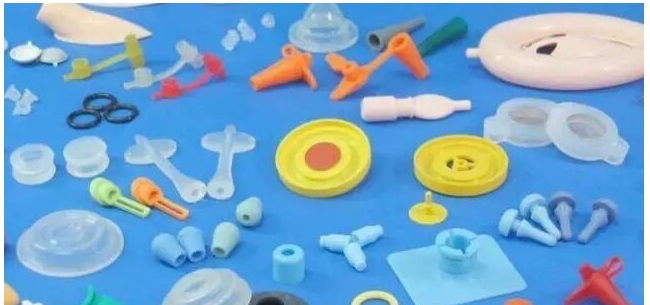
Silicone rubber can be used as a catheter for short-term insertion into a certain part of the human body, serving as an important auxiliary material and means for rescuing and treating various cases; For patients with liver dysfunction, burns, and other conditions, intravenous catheters, infusion tubes, pressure relief tubes, chest drainage tubes, otitis media ventilation tubes, gastric lavage tubes, enemas, and other disposable items are used for fluid replacement. It can also be used as a suction head for artificial heart and lung machines, membrane artificial lungs, fetal suction devices, medical electrode plate substrates, packaging materials for biosensors, etc. Many medical fields have adopted medical silicone tubing. The development trend of medical silicone tubes used for the human body is micro, thin-walled, multi lumen, and one tube for multiple purposes, such as sampling and testing, as well as irrigation and infusion.
4) Application in drug sustained-release systems
Silicone rubber can be used as a carrier for drug delivery systems, such as encapsulated drug capsules, subcutaneous implants, uterine implants, vaginal rings, skin absorbing preparations (such as various ointments), and injectable silicone rubber can be used for permanent sterilization surgery in women. In addition, silicone rubber can also be used for non-surgical female tubal occlusion and sterilization.
Silicone rubber is used as an encapsulated drug capsule, which contains various steroid compounds, prostaglandins, antibiotics, sedatives, sleeping pills, anticancer drugs, anesthetics, etc. In addition, silicone rubber can also be used as a defoamer to treat certain diseases. If it is used to rescue acute pulmonary edema, it can quickly dredge the respiratory tract, improve the hypoxia condition, and reduce or avoid suffocation due to foam blocking the airflow; Suffering from a cold and cough is due to the foaming of bronchial secretions. Eating syrup containing silicone oil has a defoaming effect, which greatly reduces coughing and has a significant effect.
5) Other applications
In addition to the above-mentioned applications, silicone rubber can also be used in the field of biomedical engineering, mainly including packaging materials for medical devices, medical electrodes, and implantable sensors.
The intraperitoneal chemotherapy delivery device is a fully silicone implantable intraperitoneal chemotherapy catheter system. The device is made of medical silicone rubber as raw material and consists of a storage box and a catheter.
Biosensors for transplantation typically require a layer of packaging material to isolate the surrounding physiological environment. Therefore, in vivo applications, especially biomedical devices implanted in the human body, have higher requirements for material reliability, durability, biocompatibility, and so on. Silicone rubber has good elasticity and biocompatibility, so the silicone rubber layer outside the electrode can be very thin, allowing water and other small molecules to freely pass through. The silicone rubber can be used as the outer package of a glucose sensitive electrode to monitor and regulate the glucose level in the blood of diabetes patients.